Highport: Difference between revisions
Abra Saghast (talk | contribs) m Formatting page after data entry. |
Abra Saghast (talk | contribs) m Text replacement - "As of " to "In " |
||
| (11 intermediate revisions by 2 users not shown) | |||
| Line 4: | Line 4: | ||
| caption = Highport, illustration by [[Anna Meyer]] (2019). | | caption = Highport, illustration by [[Anna Meyer]] (2019). | ||
| motto = <!-- motto, nickname, or other name of settlement --> | | motto = <!-- motto, nickname, or other name of settlement --> | ||
| realm = | | realm = [[Pomarj]] | ||
| size = | | size = City | ||
| established = | | established = 305 | ||
| government = | | government = Council of merchants and tribal leaders | ||
| alignment = | | alignment = | ||
| population = | | population = 15,000{{csb|LGG|86}} | ||
| races = | | races = Orcs, half-orcs, humans | ||
| languages = | | languages = | ||
| religions = Earth Dragon Cult; other deities are tolerated (see below) | | religions = Earth Dragon Cult; other deities are tolerated (see below) | ||
| authority = | | authority = Despot [[Turrosh Mak]] | ||
| organizations = | | organizations = | ||
| allies = | | allies = | ||
| Line 19: | Line 19: | ||
}} | }} | ||
'''Highport''' is a city on the northern coast of the [[Pomarj]]. The former capital city of the Pomarj, Highport was razed to the ground in [[513 CY]] following the [[Hateful Wars]], before being rebuilt as an orcish trade port. It is a profitable trade center, a haven for pirates, and a dangerous place for the weak or unwary. | |||
==History== | |||
===Establishment=== | |||
In [[295 CY]], an alliance between the prince of Ulek and the growing empire of [[Keoland]] joined forces to begin the conquest what would become the Pomarj, seeking to exploit the region's mineral wealth. Highport was constructed in [[305 CY]] on the foundations of a smaller town, allowing trade with the rest of the Flanaess.{{csb|LGG|88}} | |||
Highport, along with [[Blue]] and [[Stoneheim]], was established during a radical series of building programs by Keolandish kings.{{cite dragon|167|11|See the Pomarj—and Die!}} Highport was built during the reign of [[Tavish the Great]], who had overseen the annexation of Ulek in [[292 CY]].{{cite lgj|1|8-19|The Kingdom of Keoland}} | |||
===Independence=== | |||
In [[461 CY]], Ulek withdrew from Keoland. Two years later, in [[463 CY]], the barons of the [[Pomarj]] declared their own independence from Ulek, taking the city of Highport as their capital. The Pomarj barons ejected the dwarven garrisons of Ulek and began ruling their fiefdoms independently.{{csb|LGG|88}} | |||
The independence of the Pomarj was sparked by the human inhabitants, who grew distrustful of the dwarven lords of Ulek. Count [[Veja]], an outcast noble of the [[Great Kingdom]], arranged secret conclaves of Pomarj nobility which led to the decision to rebel against Ulek. Count Veja had planned to use this to take the title of Overlord of Highport and ruler of the Pomarj, but by bad luck was bitten by a venomous snake the day after the dwarves left. The count later raised an army of mercanaries and humanoids from the Suss Forest, but in another piece of bad luck, he died the night before the attack after the ''potions of longevity'' finally expired.{{cite dragon|167|11|See the Pomarj—and Die!}} | |||
Control of Highport thereafter passed to the Guild of Merchants. The dwarven prince of the Pomarj quickly accepted the independent baronies of the Pomarj, aware that the petty human states would be too proud to join together against Ulek. The massive amount of mineral wealth uncovered led to an unprecedented decade of wealth for Highport.{{cite dragon|167|11|See the Pomarj—and Die!}} | |||
Highport became a major trade hub on the Pomarj, particularly between the southwestern and southeastern Flanaess. Its population reached seasonal highs of nearly 10,000, plus many sailors and merchants taking up temporary residence at any time.{{csb|Slavers|89}} | |||
===Night of the Bloody Spear=== | |||
In [[498 CY]], conflict broke out between the elves, dwarves, and humans of the [[Lortmils]] and the orcs and goblins. The prince of Ulek called upon the Pomarj to form an alliance. In [[499 CY]], the human lords of the Pomarj held a meeting at Highport, where they decided to decline Ulek's support. The barons distrusted Ulek, and refused to involve themselves in what they saw as ultimately a conflict between demihumans. The Hateful Wars ended in [[510 CY]] with the orcs and goblins defeated.{{csb|LGG|88}} | |||
This outcome would lead to disaster for Highport. On the 11th of Planting, [[513 CY]], orcs and goblins driven from the Lortmils came from the [[Suss Forest]] and descended on the capital of Highport. The hardy population of Highport, which included many strong laborers and experienced seamen, put up a strong defense, repelling five separate assaults. A sixth assault breached the city gates, and Highport fell to the orcs.{{csb|Slavers|89}} | |||
The city was sacked and burned, and most of population was slaughtered or enslaved, save for a few who managed to escape with their lives. Bodies of the defenders were impaled on spikes and left on the city wall. Highport was left in ruins. The event was dubbed the Night of the Bloody Spear. Within months, the orcs would go on to conquer most of the Pomarj, finding the defenders of other towns much less capable than those of Highport.{{csb|LGG|88}}{{csb|Slavers|89}}{{cite dragon|167|11|See the Pomarj—and Die!}} | |||
Protective enchantments placed by the wizard [[Bilarro]] on the Lord's Palace allowed it to remain uncaptured for several years.{{csb|Slavers|92}} | |||
An attempt by the dwarven Prince of Ulek to recapture the Pomarj ultimately failed. Ulek was forced to accept orcish dominion over the Pomarj.{{cite dragon|167|11|See the Pomarj—and Die!}} | |||
===Reconstruction=== | |||
At a meeting of the chiefs of the orcish tribes, the wisest of the tribal leaders put forward the idea to rebuild and reopen the port in order to give the orcs a place to trade with humans. Several of the council were outraged at this unusual proposal. Prepared for this eventuality, the chief simply had them eliminated and replaced with others more amenable to his plans.{{csb|Scourge of the Slave Lords|24}} | |||
The orcs gradually rebuilt Highport, and within a few years the port was once again open to trade. Pirates who first braved the new port found it reasonably tolerant, and it soon became an important location for trade.{{csb|Slavers|89}} | |||
For over fifty years, Highport was thereafter ruled by a coalition of tribes, whose control over the city was routinely marred by factional division, blood feuds and in-fighting. Various tribes dominated the government at different times, including at least two human and half-orc controlled governments.{{csb|Slavers|89}} | |||
Highport's population rose as it became a popular haven for human followers of evil gods, who accepted the orcs as kinsmen, and half-orcs soon became common. The city was a rare port accepting of pirates, who raided shipping along the [[Woolly Bay]] and into the [[Azure Sea]].{{csb|Slavers|89}} | |||
Of note, the book [[Slerotin's Manifesto]] was rumored to have been kept in Highport for a time circa 550 CY.{{cite dragon|241|80|Arcane Lore: Greyhawk Grimoires II}} | |||
== | ===Rise of Turrosh Mak=== | ||
In [[581 CY]], the half-orc warlord [[Turrosh Mak]] rose to become ruler of the Pomarj. Turrosh Mak took the title of Despot, and establish a harsh system of laws in the city. He established a government loyal to himself settled tribal disputes by force, by magic, or by the exchange of hostages between tribes to ensuce peace. Turrosh Mak established the city's temple of the [[Earth Dragon]], seeking religious unity, and warned temples of of the gods that they would be blamed for disasters which befell the city.{{csb|Slavers|89}} | |||
Highport was one of many ports on the Woolly Bay to hire privateers to protect its shipping, while happily raiding other vessels. Following the [[Greyhawk Wars]] (582-584 CY), Highport was the only port to continue to sponsor privateers.{{csb|Slavers|38}} | |||
Highport was | |||
===Current events=== | |||
War continues between the Pomarj and the dwarves of Ulek. | |||
In [[591 CY]], the Prince of Ulek allied with the [[Knights of Luna]] to oppose Turrosh Mak. Sister [[Kuranyie]] of Onnwall has meanwhile sought an alliance.{{csb|LGG|88}} | |||
Recently, drow have been spotted in the city at night.{{csb|LGG|88}} Press gangs roam the streets at night looking for victims.{{csb|LGG|87}} | |||
==Geography== | ==Geography== | ||
Highport sits on a small sheltered inlet on the northern coast of the [[Pomarj]] peninsula. The High City, or upper area, is located at the top of a steep bluff.{{cite dungeon|221||Lowdown in Highport}} | |||
Highport is located on the northern [[Pomarj]].{{csb|LGG|87}} To the north is the [[Woolly Bay]], along which are built numerous piers, about half of which are in ruins and are used to store derelict ships for storage. The city is surrounded by a wall. Roads connect the city by land: the Suss Road to the west, Coast Road to the east, and brick-paved Slave Road to the south.{{csb|Slavers|90}}{{csb|Slavers|97}} | |||
The Coast Road is a dirt trail which leads to abandoned human villages, many occupied by the trail. The [[Bloody Ax]] gnolls, the [[Saltburner]] orcs, and the [[Ichor]] kobolds live out by this direction.{{csb|Slavers|97}} | |||
The Suss Road is the main land route used by travelers to the [[Wild Coast]]. It passes through the lands of the [[Bleeding Moon]] gnolls, [[Kraken]] hobgoblins, and then goes by the [[Suss Forest]] to [[Eldredd]].{{csb|Slavers|97}} | |||
Slaves walk the brick-paved Slave Road to the south, wide enough to allow two carts to pass one another, except in the mountains where it is only wide enough for one card and relies on paved turnouts for carts to pass one another.{{csb|Slavers|97}} | |||
==Cityscape== | |||
Much of the city still bears scars of its destruction in [[513 CY]].{{csb|LGG|87}} Many of the city's districts are divided by race. However, travel through the district where another race lives is not taboo. | |||
The orc districts are divided by tribal groups. Orcs tend to hunt the grasslands outside the city for meat, or fish on the waterfront.{{csb|Slavers|96}} Each of the various humanoid groups has one or more districts. Gnolls occupy the east; hobgoblins, goblins, and norkers live in the west; goblins also in the southwest; and orogs in a well-maintained area near the Lord's Palace.{{csb|Slavers|96}} | |||
The human districts typically have more shops, more surviving historic buildings, and more new construction. Slaves there are better treated. Shops in human districts are popular with customers of all races. A notable human establishment is The Fat Cow, a store selling dried meats, run by [[Shem]], a former mercenary and possessor of short sword [[Mouth of a Graveyard]].{{csb|Slavers|96}}{{csb|Slavers|67}} | |||
The tent fields house the city's poorest. Large areas of rubble or ruined buildings. Some charge 1 sp per month for rent on a plot in the tent fields, offering guards to protect against thieves and assassins.{{csb|Slavers|97}} Large sections of the town are still abandoned, and occupied by squattesr or monsters.{{csb|Slavers|90}} Abandoned buildings are frequently unsafe and are at constant risk of collapsing.{{csb|Scourge of the Slave Lords|25}} | |||
The warehouse district near the docks is used for storage of goods, and is well guarded by soldiers.{{csb|Slavers|92}} Three towers have been converted into lighthouses. They are manned by humans or half-orcs, as orcs are sensitive to the bright light.{{csb|Slavers|92}} Narrow streets of ramshackle wooden buildings have been constructed here, and only a handful of the original buildings stand.{{cite dungeon|221||Lowdown in Highport}} | |||
The palace district surrounds the Lord's Palace, former residence of Prince [[Kevram Bilarro]]. When the Slave Lords came to power in Highport, the wizard [[Markessa]] was able to defeat the palace's magical defenses and establish it as the leaders of Highport. The district has surrounded by its own defensive walls. In 591 CY the palace is inhabited by Markessa the Gold (aka [[Tanva]]), a duplicate of Markessa, and the half-orc fighter [[Braks]], both loyal to the [[Slave Lords]].{{csb|Slavers|92}}{{csb|Slavers|93}} | |||
Hordes of giant rats are a common problem in many neighborhoods. Casks of oil are kept in order to create barriers of fire to keep the rats out. Stirges act as a predator creature which keep the rats in check, but the stirges themselves are a danger. Giant weasels are kept as pets or guard animals, but often run wild in the city's abandoned areas.{{csb|Slavers|91}} Those who come to the city often find work as rat catchers, but it is a menial job does not pay well.{{csb|Scourge of the Slave Lords|26}} | |||
Temples to many deities exist in this city (see [[Highport#Religion|Religion]]). | |||
The city had a sewer system, but it has largely fallen into disrepair.{{cite dungeon|221||Lowdown in Highport}} | |||
==People== | ==People== | ||
===Population=== | ===Population and demographics=== | ||
Highport is the largest city in the [[Pomarj]]. Almost 15,000 people live there. Humans are the most common, and orcs and half-orcs are common. The city's non-human population are more commonly seen at night.{{csb|LGG|87}} | |||
Rare inhabitants include a pair of harpies, a pair of hill giants, a pack of trolls, an extended family of ogre mercenaries, and a pack of ghouls who live outside the city.{{csb|Slavers|91}} A rare individual is the mind flayer [[Quiet]], whose the restaurant House of Quiet; all the staff are mind-controlled slaves, and customers are expected to remain quiet or risk incurring the mind flayer's wrath.{{csb|Slavers|93}} A few undead exist who were once human citizens, now clinging to unlife by sheer force of will and the desire to avenge themselves.{{csb|Slavers|90}} | |||
Many of the city's population are slaves, who provide menial labor. The life of a slave in Highport is often difficult and short. Wealthy and cruel warriors sometimes free slaves outside of the city, only to hunt them down; slaves are wary about any buyer who is eager to free them.{{csb|Slavers|95}} Slaves are regularly kept in chains or at least wear some kind of collar which denotes them as such.{{csb|Slavers|97}} | |||
===Religion=== | ===Religion=== | ||
Many religions have temples in this Highport. | |||
Turrosh Mak established a temple of the [[Earth Dragon]] here, with the goal of encouraging religious unity among the city's inhabitants. It was built in a renovated temple of [[Xerbo]] that was damaged when the city was sacked.{{csb|Slavers|90}} The high priest here is the half-orc [[Nofosh]], who has twenty lesser priests and ten acolytes. The temple chargest the lowest rates in the city for healing spells, and is a popular stop with visitors to the city, as one of the few temples to protective gods. It has a good view of the harbor.{{csb|Slavers|91}} | |||
The worship of orc god [[Gruumsh]] has decreased in favor of the Earth Dragon, and only a small temple to the god now exists, in a small house inhabited by the priest [[Nabbok]]. Every few months he saves enough donations to purchase an old or weak slave for sacrifice, which draws some followers.{{csb|Slavers|92}} | |||
[[Yeenoghu]] is worshipped by the gnolls who live on the east side of town. His temple here is run by the shaman [[Rafguraat]], brother of [[Lorrosh]] of the [[Blue Eye]] tribe.{{csb|Slavers|92}} | |||
There is a temple in the city to [[Mictlantecuhtli]], [[Olman]] death god.. It was established by former Olman slaves from the [[Hold of the Sea Princes]]. The temple is run by [[Lipcatihli]], an Olman priest who is unaware that his enemy, the Scarlet Brotherhood, is behind the [[Slave Lords]].{{csb|Slavers|92}} | |||
The temple to [[Beltar]] leads down into a subterranean altar. It is guarded by two zombies and is led by the orc [[Kurrsh]], supported in secret by the [[Scarlet Brotherhood]].{{csb|Slavers|93}} | |||
The temple to [[Erythnul]] is a converted butcher's shop led by the priest [[Renchen]], who preaches outdoors to all, sometimes unpopularly in the dead of night. Renchen has feral features, and it is suspected that he is part gnoll. Pirates and raiders pay Erythnul tribute here before a journey.{{csb|Slavers|94}} | |||
A temple to [[Incabulos]] is run by an insane human priest known as the [[Mad One]], who has held the position for three years. He engages in bizarre rituals such as screaming at random times, curses unseen enemies, casts money into the bay, and burns black candles when a ship enters or leaves port. The temple is little more than an abandoned house with a bronze possession rune nailed to the door. It is believed that leaving coins before his door wards off sickness.{{csb|Slavers|94}} | |||
The temple to [[Hextor]] consists of a warehouse which was once filled with slaves and prisoners of war, who were slaughtered. It has since been converted into a military training facility. Five priests hold services here. The high priest is named [[Satran]]. | |||
{{csb|Slavers|94}} | |||
A temple to [[Nerull]] is built in a former orphanage whose inhabitants were slaughtered as they hid from the orc army. The windows are boarded up and the building has been painted black. The high priest is a human named [[Torish]].{{csb|Slavers|94}} | |||
A store here sells hot sauce and poison. It also serves as a temple to the Suel fire deity [[Pyremius]]. The temple is led by [[Malav]], who is served by a number of her acolytes.{{csb|Slavers|94}}{{csb|Slavers|95}} | |||
A temple to [[Iuz]] here is run by a man named [[Marten]], an outspoken man known for his many complaints, including about the living conditions in the city, lack of respect for his deity there, and his negative opinion of the government. He is tolerated because he is so unpopular that he distracts the public hatred from the activities of the Slave Lords.{{csb|Slavers|95}} | |||
The cult of [[Vecna]], illegal in some civilized lands, operates openly here. Only a handful of low-level priests operate the temple here, run by a necromancer named [[Gotto]]. Their temple is guarded by a basilisk, who wears a gauze head-dress during the day to protect is petrifying gaze.{{csb|Slavers|95}} | |||
A temple to [[Maglubiyet]], deity of goblin and hobgblins, is run here by a shaman named [[Jukko]], who serves as spiritual leader for all goblinoids in the city, even those who worship the Earth Dragon. The temple sacrifices slaves to Maglubiyet every new moon.{{csb|Slavers|95}} | |||
===Languages=== | |||
The languages of many nonhuman races are spoken here. | |||
==Government== | ==Government== | ||
The city is run by a coalition of mercantile and mercenary factions who ultimately report to Despot [[Turrosh Mak]].{{csb|LGG|87}} | |||
===Law and justice=== | |||
The city was in a state of anarchy for over fifty years following the razing of the city, during which no fair system of justice existed.{{csb|LGG|87}} What laws existed were simple, and its enforcers served as judge, jury and executioner.{{csb|Scourge of the Slave Lords|24}} | |||
With the recent rise of Turrosh Mak came a harsh but fair system of laws intended to maintain order in the city. However, the city is still somewhat dangerous, especially at night.{{csb|LGG|87}} | |||
Most crimes are punishable by fines or temporarily incarceration in jails beneath the city guardhouse. Striking a city guard with a fist is a minor offence. Pulling a weapon on a city guard is more serious and grounds for imprisonment, assuming the guard does not simply kill their attacker. More serious crimes result in execution or enslavement.{{csb|Slavers|96}} | |||
Slavery is legal here. Freemen are nonetheless valued as reliable employees, as they tend to have a better work ethic and are unlikely to unexpectedly attempt to flee.{{csb|Slavers|90}} It is illegal to remove a newly purchased slave from the Stockade unless in restraints.{{csb|Slavers|95}} Human sacrifice for religious purposes is tolerated here.{{csb|Slavers|92}} | |||
===Military=== | ===Military=== | ||
The military might Highport is substantial enough that it does not fear from any othe settlement of the Wooly Bay.{{csb|The City of Greyhawk|33|Greyhawk: Gem of the Flanaess}} | |||
A city guard barracks houses around a hundred men under the command of Braks. A few are officers who handle routine matters. The guards travel in groups of ten. Each carries a signal horn used to call for support. The guards are identified their blue diagonal sash. The guards mainly handle policing in the city. In an emergency, another two hundred men can be conscripted in less than a day.{{csb|Slavers|95}}{{csb|Slavers|96}} City patrols are responsible for enforcing the law and finding escaped slaves.{{cite dungeon|221||Lowdown in Highport}} | |||
Turrosh Mak has begun building a major pirate navy of human and half-orcs. He intends to use this fleet to extend his power over the [[Azure Sea]].{{csb|LGG|88}} | |||
==Economy== | ==Economy== | ||
===Resources=== | ===Resources=== | ||
Highport was originally built as a port for the export of gemstones and minerals. While some ships are repaired here, most shipbuilding takes place further at the port of [[Eldredd]]. | |||
{{csb|Slavers|97}} Work is always available in industries such as shipping, fisheries, and manual labor.{{csb|Scourge of the Slave Lords|26}} | |||
===Trade=== | |||
Highport's markets and shipping port make it an important commercial center. During the day, it does a great deal of trade.{{csb|LGG|87}} Ships of the [[Scarlet Brotherhood]] are occasionally seen here, although they do so carefully, and under a foreign flag or no flag.{{csb|Slavers|89}} | |||
Slaves are openly traded in Highport.{{csb|Slavers|97}} They are brought in by sea and held in the Stockade, a fenced-in yard opposite the city guard barracks. The healthiest slaves are shipped off to [[Kalen Lekos]], while the rest are auctioned the next day at a price starting from 5 gp for a human, and up to three times as much for dwarves and elves. Unsold slaves are sold at discount or in lots, and are often used as sacrifice to evil gods.{{csb|Slavers|95}} | |||
Most trade eastward is carried by ships. On average, 3-13 ships are found in port on a typical day.{{csb|Slavers|97}} | |||
===Currency=== | ===Currency=== | ||
== | Various official and unofficial currencies are used in the Pomarj, including coins minted by cities, towns, and tribes.{{csb|LGG|86}} | ||
==Gallery== | |||
=== Maps === | |||
<gallery> | |||
Highport.jpg|By Sam Wood, ''The Adventure Begins'' (1998) | |||
</gallery> | |||
==Publishing history== | ==Publishing history== | ||
=== First edition === | |||
Highport first appeared in the adventures A1 [[Slave Pits of the Undercity]] (1980) and A2 [[Secret of the Slavers]] (1981), later collected into A1-4 Scourge of the Slave Lords (1986). The city was officially incorporated into the Flanaess by [[World of Greyhawk Fantasy Game Setting]] (1983). | |||
Highport was featured in the AD&D first edition adventure ''Lowdown in Highport'', appearing in Dungeon Magazine #221 (Dec 2013), the final ever digital issue of Dungeon magazine. | |||
== | === Second edition === | ||
Highport is described in most detail in in Slavers (2000) p.89-97. | |||
Highport appeared in Greyhawk Adventures (1988), Puppets (1989), The City of Greyhawk (1989), Vecna Lives! (1990), From the Ashes (1992), Player's Guide to Greyhawk (1998), The Adventure Begins (1998), and Slavers (2000). | |||
=== Third edition === | |||
Highport is mentioned in the [[Living Greyhawk Gazetteer]] (2000). | |||
== | === Fourth edition === | ||
Highport was the site of an adventure in ''[[Dungeon]]'' magazine #221 (Dec 2013) title ''Lowdown in Highport'', by Thomas M. Reid. It was designed to take place between A0 ''[[Danger at Darkshelf Quarry]]'' and A1 ''[[Slave Pits of the Undercity]]''. Though it was written at the very end of fourth edition, it was written using second edition rules and was given a fourth edition conversion appendix after the main body of the adventure. | |||
==References== | ==References== | ||
===Citations=== | |||
<references /> | <references /> | ||
===Bibliography=== | |||
{{index}} | {{index}} | ||
[[Category:Settlements]] | |||
[[Category: | |||
Latest revision as of 12:25, 22 January 2025
| Highport | |
|---|---|
 Highport, illustration by Anna Meyer (2019). | |
| General information | |
| Realm: | Pomarj |
| Size: | City |
| Government | |
| Authority: | Despot Turrosh Mak |
| Government: | Council of merchants and tribal leaders |
| Established: | 305 CY |
| Demographics | |
| Population: | 15,000[1] |
| Races: | Orcs, half-orcs, humans |
| Groups | |
| Religions: | Earth Dragon Cult; other deities are tolerated (see below) |
Highport is a city on the northern coast of the Pomarj. The former capital city of the Pomarj, Highport was razed to the ground in 513 CY following the Hateful Wars, before being rebuilt as an orcish trade port. It is a profitable trade center, a haven for pirates, and a dangerous place for the weak or unwary.
History
Establishment
In 295 CY, an alliance between the prince of Ulek and the growing empire of Keoland joined forces to begin the conquest what would become the Pomarj, seeking to exploit the region's mineral wealth. Highport was constructed in 305 CY on the foundations of a smaller town, allowing trade with the rest of the Flanaess.[2]
Highport, along with Blue and Stoneheim, was established during a radical series of building programs by Keolandish kings.[3] Highport was built during the reign of Tavish the Great, who had overseen the annexation of Ulek in 292 CY.[4]
Independence
In 461 CY, Ulek withdrew from Keoland. Two years later, in 463 CY, the barons of the Pomarj declared their own independence from Ulek, taking the city of Highport as their capital. The Pomarj barons ejected the dwarven garrisons of Ulek and began ruling their fiefdoms independently.[2]
The independence of the Pomarj was sparked by the human inhabitants, who grew distrustful of the dwarven lords of Ulek. Count Veja, an outcast noble of the Great Kingdom, arranged secret conclaves of Pomarj nobility which led to the decision to rebel against Ulek. Count Veja had planned to use this to take the title of Overlord of Highport and ruler of the Pomarj, but by bad luck was bitten by a venomous snake the day after the dwarves left. The count later raised an army of mercanaries and humanoids from the Suss Forest, but in another piece of bad luck, he died the night before the attack after the potions of longevity finally expired.[3]
Control of Highport thereafter passed to the Guild of Merchants. The dwarven prince of the Pomarj quickly accepted the independent baronies of the Pomarj, aware that the petty human states would be too proud to join together against Ulek. The massive amount of mineral wealth uncovered led to an unprecedented decade of wealth for Highport.[3]
Highport became a major trade hub on the Pomarj, particularly between the southwestern and southeastern Flanaess. Its population reached seasonal highs of nearly 10,000, plus many sailors and merchants taking up temporary residence at any time.[5]
Night of the Bloody Spear
In 498 CY, conflict broke out between the elves, dwarves, and humans of the Lortmils and the orcs and goblins. The prince of Ulek called upon the Pomarj to form an alliance. In 499 CY, the human lords of the Pomarj held a meeting at Highport, where they decided to decline Ulek's support. The barons distrusted Ulek, and refused to involve themselves in what they saw as ultimately a conflict between demihumans. The Hateful Wars ended in 510 CY with the orcs and goblins defeated.[2]
This outcome would lead to disaster for Highport. On the 11th of Planting, 513 CY, orcs and goblins driven from the Lortmils came from the Suss Forest and descended on the capital of Highport. The hardy population of Highport, which included many strong laborers and experienced seamen, put up a strong defense, repelling five separate assaults. A sixth assault breached the city gates, and Highport fell to the orcs.[5]
The city was sacked and burned, and most of population was slaughtered or enslaved, save for a few who managed to escape with their lives. Bodies of the defenders were impaled on spikes and left on the city wall. Highport was left in ruins. The event was dubbed the Night of the Bloody Spear. Within months, the orcs would go on to conquer most of the Pomarj, finding the defenders of other towns much less capable than those of Highport.[2][5][3]
Protective enchantments placed by the wizard Bilarro on the Lord's Palace allowed it to remain uncaptured for several years.[6]
An attempt by the dwarven Prince of Ulek to recapture the Pomarj ultimately failed. Ulek was forced to accept orcish dominion over the Pomarj.[3]
Reconstruction
At a meeting of the chiefs of the orcish tribes, the wisest of the tribal leaders put forward the idea to rebuild and reopen the port in order to give the orcs a place to trade with humans. Several of the council were outraged at this unusual proposal. Prepared for this eventuality, the chief simply had them eliminated and replaced with others more amenable to his plans.[7]
The orcs gradually rebuilt Highport, and within a few years the port was once again open to trade. Pirates who first braved the new port found it reasonably tolerant, and it soon became an important location for trade.[5]
For over fifty years, Highport was thereafter ruled by a coalition of tribes, whose control over the city was routinely marred by factional division, blood feuds and in-fighting. Various tribes dominated the government at different times, including at least two human and half-orc controlled governments.[5]
Highport's population rose as it became a popular haven for human followers of evil gods, who accepted the orcs as kinsmen, and half-orcs soon became common. The city was a rare port accepting of pirates, who raided shipping along the Woolly Bay and into the Azure Sea.[5]
Of note, the book Slerotin's Manifesto was rumored to have been kept in Highport for a time circa 550 CY.[8]
Rise of Turrosh Mak
In 581 CY, the half-orc warlord Turrosh Mak rose to become ruler of the Pomarj. Turrosh Mak took the title of Despot, and establish a harsh system of laws in the city. He established a government loyal to himself settled tribal disputes by force, by magic, or by the exchange of hostages between tribes to ensuce peace. Turrosh Mak established the city's temple of the Earth Dragon, seeking religious unity, and warned temples of of the gods that they would be blamed for disasters which befell the city.[5]
Highport was one of many ports on the Woolly Bay to hire privateers to protect its shipping, while happily raiding other vessels. Following the Greyhawk Wars (582-584 CY), Highport was the only port to continue to sponsor privateers.[9]
Current events
War continues between the Pomarj and the dwarves of Ulek.
In 591 CY, the Prince of Ulek allied with the Knights of Luna to oppose Turrosh Mak. Sister Kuranyie of Onnwall has meanwhile sought an alliance.[2]
Recently, drow have been spotted in the city at night.[2] Press gangs roam the streets at night looking for victims.[10]
Geography
Highport sits on a small sheltered inlet on the northern coast of the Pomarj peninsula. The High City, or upper area, is located at the top of a steep bluff.[11]
Highport is located on the northern Pomarj.[10] To the north is the Woolly Bay, along which are built numerous piers, about half of which are in ruins and are used to store derelict ships for storage. The city is surrounded by a wall. Roads connect the city by land: the Suss Road to the west, Coast Road to the east, and brick-paved Slave Road to the south.[12][13]
The Coast Road is a dirt trail which leads to abandoned human villages, many occupied by the trail. The Bloody Ax gnolls, the Saltburner orcs, and the Ichor kobolds live out by this direction.[13]
The Suss Road is the main land route used by travelers to the Wild Coast. It passes through the lands of the Bleeding Moon gnolls, Kraken hobgoblins, and then goes by the Suss Forest to Eldredd.[13]
Slaves walk the brick-paved Slave Road to the south, wide enough to allow two carts to pass one another, except in the mountains where it is only wide enough for one card and relies on paved turnouts for carts to pass one another.[13]
Cityscape
Much of the city still bears scars of its destruction in 513 CY.[10] Many of the city's districts are divided by race. However, travel through the district where another race lives is not taboo.
The orc districts are divided by tribal groups. Orcs tend to hunt the grasslands outside the city for meat, or fish on the waterfront.[14] Each of the various humanoid groups has one or more districts. Gnolls occupy the east; hobgoblins, goblins, and norkers live in the west; goblins also in the southwest; and orogs in a well-maintained area near the Lord's Palace.[14]
The human districts typically have more shops, more surviving historic buildings, and more new construction. Slaves there are better treated. Shops in human districts are popular with customers of all races. A notable human establishment is The Fat Cow, a store selling dried meats, run by Shem, a former mercenary and possessor of short sword Mouth of a Graveyard.[14][15]
The tent fields house the city's poorest. Large areas of rubble or ruined buildings. Some charge 1 sp per month for rent on a plot in the tent fields, offering guards to protect against thieves and assassins.[13] Large sections of the town are still abandoned, and occupied by squattesr or monsters.[12] Abandoned buildings are frequently unsafe and are at constant risk of collapsing.[16]
The warehouse district near the docks is used for storage of goods, and is well guarded by soldiers.[6] Three towers have been converted into lighthouses. They are manned by humans or half-orcs, as orcs are sensitive to the bright light.[6] Narrow streets of ramshackle wooden buildings have been constructed here, and only a handful of the original buildings stand.[11]
The palace district surrounds the Lord's Palace, former residence of Prince Kevram Bilarro. When the Slave Lords came to power in Highport, the wizard Markessa was able to defeat the palace's magical defenses and establish it as the leaders of Highport. The district has surrounded by its own defensive walls. In 591 CY the palace is inhabited by Markessa the Gold (aka Tanva), a duplicate of Markessa, and the half-orc fighter Braks, both loyal to the Slave Lords.[6][17]
Hordes of giant rats are a common problem in many neighborhoods. Casks of oil are kept in order to create barriers of fire to keep the rats out. Stirges act as a predator creature which keep the rats in check, but the stirges themselves are a danger. Giant weasels are kept as pets or guard animals, but often run wild in the city's abandoned areas.[18] Those who come to the city often find work as rat catchers, but it is a menial job does not pay well.[19]
Temples to many deities exist in this city (see Religion).
The city had a sewer system, but it has largely fallen into disrepair.[11]
People
Population and demographics
Highport is the largest city in the Pomarj. Almost 15,000 people live there. Humans are the most common, and orcs and half-orcs are common. The city's non-human population are more commonly seen at night.[10]
Rare inhabitants include a pair of harpies, a pair of hill giants, a pack of trolls, an extended family of ogre mercenaries, and a pack of ghouls who live outside the city.[18] A rare individual is the mind flayer Quiet, whose the restaurant House of Quiet; all the staff are mind-controlled slaves, and customers are expected to remain quiet or risk incurring the mind flayer's wrath.[17] A few undead exist who were once human citizens, now clinging to unlife by sheer force of will and the desire to avenge themselves.[12]
Many of the city's population are slaves, who provide menial labor. The life of a slave in Highport is often difficult and short. Wealthy and cruel warriors sometimes free slaves outside of the city, only to hunt them down; slaves are wary about any buyer who is eager to free them.[20] Slaves are regularly kept in chains or at least wear some kind of collar which denotes them as such.[13]
Religion
Many religions have temples in this Highport.
Turrosh Mak established a temple of the Earth Dragon here, with the goal of encouraging religious unity among the city's inhabitants. It was built in a renovated temple of Xerbo that was damaged when the city was sacked.[12] The high priest here is the half-orc Nofosh, who has twenty lesser priests and ten acolytes. The temple chargest the lowest rates in the city for healing spells, and is a popular stop with visitors to the city, as one of the few temples to protective gods. It has a good view of the harbor.[18]
The worship of orc god Gruumsh has decreased in favor of the Earth Dragon, and only a small temple to the god now exists, in a small house inhabited by the priest Nabbok. Every few months he saves enough donations to purchase an old or weak slave for sacrifice, which draws some followers.[6]
Yeenoghu is worshipped by the gnolls who live on the east side of town. His temple here is run by the shaman Rafguraat, brother of Lorrosh of the Blue Eye tribe.[6]
There is a temple in the city to Mictlantecuhtli, Olman death god.. It was established by former Olman slaves from the Hold of the Sea Princes. The temple is run by Lipcatihli, an Olman priest who is unaware that his enemy, the Scarlet Brotherhood, is behind the Slave Lords.[6]
The temple to Beltar leads down into a subterranean altar. It is guarded by two zombies and is led by the orc Kurrsh, supported in secret by the Scarlet Brotherhood.[17]
The temple to Erythnul is a converted butcher's shop led by the priest Renchen, who preaches outdoors to all, sometimes unpopularly in the dead of night. Renchen has feral features, and it is suspected that he is part gnoll. Pirates and raiders pay Erythnul tribute here before a journey.[21]
A temple to Incabulos is run by an insane human priest known as the Mad One, who has held the position for three years. He engages in bizarre rituals such as screaming at random times, curses unseen enemies, casts money into the bay, and burns black candles when a ship enters or leaves port. The temple is little more than an abandoned house with a bronze possession rune nailed to the door. It is believed that leaving coins before his door wards off sickness.[21]
The temple to Hextor consists of a warehouse which was once filled with slaves and prisoners of war, who were slaughtered. It has since been converted into a military training facility. Five priests hold services here. The high priest is named Satran. [21]
A temple to Nerull is built in a former orphanage whose inhabitants were slaughtered as they hid from the orc army. The windows are boarded up and the building has been painted black. The high priest is a human named Torish.[21]
A store here sells hot sauce and poison. It also serves as a temple to the Suel fire deity Pyremius. The temple is led by Malav, who is served by a number of her acolytes.[21][20]
A temple to Iuz here is run by a man named Marten, an outspoken man known for his many complaints, including about the living conditions in the city, lack of respect for his deity there, and his negative opinion of the government. He is tolerated because he is so unpopular that he distracts the public hatred from the activities of the Slave Lords.[20]
The cult of Vecna, illegal in some civilized lands, operates openly here. Only a handful of low-level priests operate the temple here, run by a necromancer named Gotto. Their temple is guarded by a basilisk, who wears a gauze head-dress during the day to protect is petrifying gaze.[20]
A temple to Maglubiyet, deity of goblin and hobgblins, is run here by a shaman named Jukko, who serves as spiritual leader for all goblinoids in the city, even those who worship the Earth Dragon. The temple sacrifices slaves to Maglubiyet every new moon.[20]
Languages
The languages of many nonhuman races are spoken here.
Government
The city is run by a coalition of mercantile and mercenary factions who ultimately report to Despot Turrosh Mak.[10]
Law and justice
The city was in a state of anarchy for over fifty years following the razing of the city, during which no fair system of justice existed.[10] What laws existed were simple, and its enforcers served as judge, jury and executioner.[7]
With the recent rise of Turrosh Mak came a harsh but fair system of laws intended to maintain order in the city. However, the city is still somewhat dangerous, especially at night.[10]
Most crimes are punishable by fines or temporarily incarceration in jails beneath the city guardhouse. Striking a city guard with a fist is a minor offence. Pulling a weapon on a city guard is more serious and grounds for imprisonment, assuming the guard does not simply kill their attacker. More serious crimes result in execution or enslavement.[14]
Slavery is legal here. Freemen are nonetheless valued as reliable employees, as they tend to have a better work ethic and are unlikely to unexpectedly attempt to flee.[12] It is illegal to remove a newly purchased slave from the Stockade unless in restraints.[20] Human sacrifice for religious purposes is tolerated here.[6]
Military
The military might Highport is substantial enough that it does not fear from any othe settlement of the Wooly Bay.[22]
A city guard barracks houses around a hundred men under the command of Braks. A few are officers who handle routine matters. The guards travel in groups of ten. Each carries a signal horn used to call for support. The guards are identified their blue diagonal sash. The guards mainly handle policing in the city. In an emergency, another two hundred men can be conscripted in less than a day.[20][14] City patrols are responsible for enforcing the law and finding escaped slaves.[11]
Turrosh Mak has begun building a major pirate navy of human and half-orcs. He intends to use this fleet to extend his power over the Azure Sea.[2]
Economy
Resources
Highport was originally built as a port for the export of gemstones and minerals. While some ships are repaired here, most shipbuilding takes place further at the port of Eldredd. [13] Work is always available in industries such as shipping, fisheries, and manual labor.[19]
Trade
Highport's markets and shipping port make it an important commercial center. During the day, it does a great deal of trade.[10] Ships of the Scarlet Brotherhood are occasionally seen here, although they do so carefully, and under a foreign flag or no flag.[5]
Slaves are openly traded in Highport.[13] They are brought in by sea and held in the Stockade, a fenced-in yard opposite the city guard barracks. The healthiest slaves are shipped off to Kalen Lekos, while the rest are auctioned the next day at a price starting from 5 gp for a human, and up to three times as much for dwarves and elves. Unsold slaves are sold at discount or in lots, and are often used as sacrifice to evil gods.[20]
Most trade eastward is carried by ships. On average, 3-13 ships are found in port on a typical day.[13]
Currency
Various official and unofficial currencies are used in the Pomarj, including coins minted by cities, towns, and tribes.[1]
Gallery
Maps
-
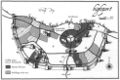 By Sam Wood, The Adventure Begins (1998)

Publishing history
First edition
Highport first appeared in the adventures A1 Slave Pits of the Undercity (1980) and A2 Secret of the Slavers (1981), later collected into A1-4 Scourge of the Slave Lords (1986). The city was officially incorporated into the Flanaess by World of Greyhawk Fantasy Game Setting (1983).
Highport was featured in the AD&D first edition adventure Lowdown in Highport, appearing in Dungeon Magazine #221 (Dec 2013), the final ever digital issue of Dungeon magazine.
Second edition
Highport is described in most detail in in Slavers (2000) p.89-97.
Highport appeared in Greyhawk Adventures (1988), Puppets (1989), The City of Greyhawk (1989), Vecna Lives! (1990), From the Ashes (1992), Player's Guide to Greyhawk (1998), The Adventure Begins (1998), and Slavers (2000).
Third edition
Highport is mentioned in the Living Greyhawk Gazetteer (2000).
Fourth edition
Highport was the site of an adventure in Dungeon magazine #221 (Dec 2013) title Lowdown in Highport, by Thomas M. Reid. It was designed to take place between A0 Danger at Darkshelf Quarry and A1 Slave Pits of the Undercity. Though it was written at the very end of fourth edition, it was written using second edition rules and was given a fourth edition conversion appendix after the main body of the adventure.
References
Citations
- ↑ a b Living Greyhawk Gazetteer (2000), p.86.
- ↑ a b c d e f g Living Greyhawk Gazetteer (2000), p.88.
- ↑ a b c d e "See the Pomarj—and Die!". Dragon #167 (Mar 1991), p.11.
- ↑ "The Kingdom of Keoland". Living Greyhawk Journal #1 (Sep 2000), p.8-19.
- ↑ a b c d e f g h Slavers (2000), p.89.
- ↑ a b c d e f g h Slavers (2000), p.92.
- ↑ a b A1-4 Scourge of the Slave Lords (1986), p.24.
- ↑ "Arcane Lore: Greyhawk Grimoires II". Dragon #241 (Nov 1997), p.80.
- ↑ Slavers (2000), p.38.
- ↑ a b c d e f g h Living Greyhawk Gazetteer (2000), p.87.
- ↑ a b c d "Lowdown in Highport". Dungeon #221 (Dec 2013)
- ↑ a b c d e Slavers (2000), p.90.
- ↑ a b c d e f g h i Slavers (2000), p.97.
- ↑ a b c d e Slavers (2000), p.96.
- ↑ Slavers (2000), p.67.
- ↑ A1-4 Scourge of the Slave Lords (1986), p.25.
- ↑ a b c Slavers (2000), p.93.
- ↑ a b c Slavers (2000), p.91.
- ↑ a b A1-4 Scourge of the Slave Lords (1986), p.26.
- ↑ a b c d e f g h Slavers (2000), p.95.
- ↑ a b c d e Slavers (2000), p.94.
- ↑ The City of Greyhawk (1989), p.33, Greyhawk: Gem of the Flanaess.
Bibliography
Encyclopedia Greyhawkania Index
The Encyclopedia Greyhawkania Index (EGI) is based on previous work of Jason Zavoda through '08, continued by numerous other fans. The EGI article has a list of sources, product names, abbreviations, and a link to the full, downloadable index.
| Topic | Type | Description | Product | Page/Card/Image
|
|---|---|---|---|---|
| Barnacle Rock Inn (Highport) | Building | Inn, | A1-4 Scourge of the Slave Lords | 28 |
| Beltar, Temple of (Highport) | Building | Temple, | Slavers, AD&D 2e | 90, 93 |
| Coast Road (Highport) | Infrastructure | Street or road, | Slavers, AD&D 2e | 90, 97 |
| Erythnul, Temple of (Highport) | Building | Temple, | Slavers, AD&D 2e | 90, 94 |
| Fat Cow (Highport) | Building | Shop, | Slavers, AD&D 2e | 96 |
| Gruumsh, Temple of (Highport) | Building | Temple, | A2 Secret of the Slavers Stockade | 2 |
| Gruumsh, Temple of (Highport) | Building | Temple, | Slavers, AD&D 2e | 92 |
| Hextor, Temple of (Highport) | Building | Temple, | Slavers, AD&D 2e | 90, 94 |
| Highport | Settlement | Pomarj, Settlement, (591 pop: 15000), | A1 Slave Pits of the Undercity | 2, 10 |
| Highport | Settlement | Pomarj, Settlement, (591 pop: 15000), | A1-4 Scourge of the Slave Lords | 2, 5, 12, 16, 18, 19, 23, 24-29, 45-47, 54, 55 |
| Highport | Settlement | Pomarj, Settlement, (591 pop: 15000), | A2 Secret of the Slavers Stockade | 2, 4, 20 |
| Highport | Settlement | Pomarj, Settlement, (591 pop: 15000), | A4 In The Dungeons of the Slave Lords | 2 |
| Highport | Settlement | Pomarj, Settlement, (591 pop: 15000), | Artifact of Evil | 30, 59 |
| Highport | Settlement | Pomarj, Settlement, (591 pop: 15000), | The City of Greyhawk: Gem of the Flanaess | 18, 33 |
| Highport | Settlement | Pomarj, Settlement, (591 pop: 15000), | Dragon magazine #167 | 10, 11, 13 |
| Highport | Settlement | Pomarj, Settlement, (591 pop: 15000), | Dragon magazine #241 | 80 |
| Highport | Settlement | Pomarj, Settlement, (591 pop: 15000), | From the Ashes: Atlas of the Flanaess | 72 |
| Highport | Settlement | Pomarj, Settlement, (591 pop: 15000), | From the Ashes: References Card | #3 |
| Highport | Settlement | Pomarj, Settlement, (591 pop: 15000), | Greyhawk Adventures | 101 |
| Highport | Settlement | Pomarj, Settlement, (591 pop: 15000), | Living Greyhawk Gazetteer | 66, 86, 87, 88 |
| Highport | Settlement | Pomarj, Settlement, (591 pop: 15000), | Oerth Journal #04 | 9 |
| Highport | Settlement | Pomarj, Settlement, (591 pop: 15000), | Oerth Journal #10 | 19 |
| Highport | Settlement | Pomarj, Settlement, (591 pop: 15000), | Oerth Journal #21 | 29 |
| Highport | Settlement | Pomarj, Settlement, (591 pop: 15000), | Oerth Journal #29 | 38 |
| Highport | Settlement | Pomarj, Settlement, (591 pop: 15000), | Oerth Journal #32 | 22,37,43 |
| Highport | Settlement | Pomarj, Settlement, (591 pop: 15000), | Player's Guide to Greyhawk | 59 |
| Highport | Settlement | Pomarj, Settlement, (591 pop: 15000), | Slavers, AD&D 2e | 1, 5, 38, 39, 44, 86, 88-98, 101, 121 |
| Highport | Settlement | Pomarj, Settlement, (591 pop: 15000), | The Adventure Begins | 33, 56 |
| Highport | Settlement | Pomarj, Settlement, (591 pop: 15000), | WG11 Puppets | IC, 5 |
| Highport | Settlement | Pomarj, Settlement, (591 pop: 15000), | WGA4 Vecna Lives! | 49 |
| Highport | Settlement | Pomarj, Settlement, (591 pop: 15000), | World of Greyhawk boxed set (1983) | 48 |
| Highport | Settlement | Pomarj, Settlement, (591 pop: 15000), | World of Greyhawk boxed set (1983) | 30, IBC |
| House of Quiet (Highport) | Building | Inn, Tavern, Bar, or Restaurant , | Slavers, AD&D 2e | 93 |
| Incabulos, Temple of (Highport) | Building | Temple, | Slavers, AD&D 2e | 90, 94 |
| Iuz, Temple of (Highport) | Building | Temple, | Slavers, AD&D 2e | 90, 95 |
| Lords Palace (Highport) | Place | Palace, | Slavers, AD&D 2e | 92, 96 |
| Lowdown in Highport | Adventure | Located in: Wild coast, | Dungeon magazine #221 | |
| Maglubiyet, Temple of (Highport) | Building | Temple, | Slavers, AD&D 2e | 95 |
| Merchants, Guild of (Highport) | People Group | Guild, | Dragon magazine #167 | 11 |
| Mictlantecuhtli, Temple of (Highport) | Building | Temple, | Slavers, AD&D 2e | 90, 92 |
| Nerull, Temple of (Highport) | Building | Temple, | Slavers, AD&D 2e | 90, 91, 94 |
| Pyremius, Temple of (Highport) | Building | Temple, | Slavers, AD&D 2e | 90, 94, 95 |
| Suss Road (Highport) | Infrastructure | Street or road, | Slavers, AD&D 2e | 90, 97 |
| Vecna, Temple of (Highport) | Building | Temple, | Slavers, AD&D 2e | 90, 95 |
| Warehouse District (Highport) | Place | District, | Slavers, AD&D 2e | 92 |
| Xerbo, Temple of (Highport) | Building | Temple, | Slavers, AD&D 2e | 90, 91 |
| Yeenoghu, Temple of (Highport) | Building | Temple, | Slavers, AD&D 2e | 92 |